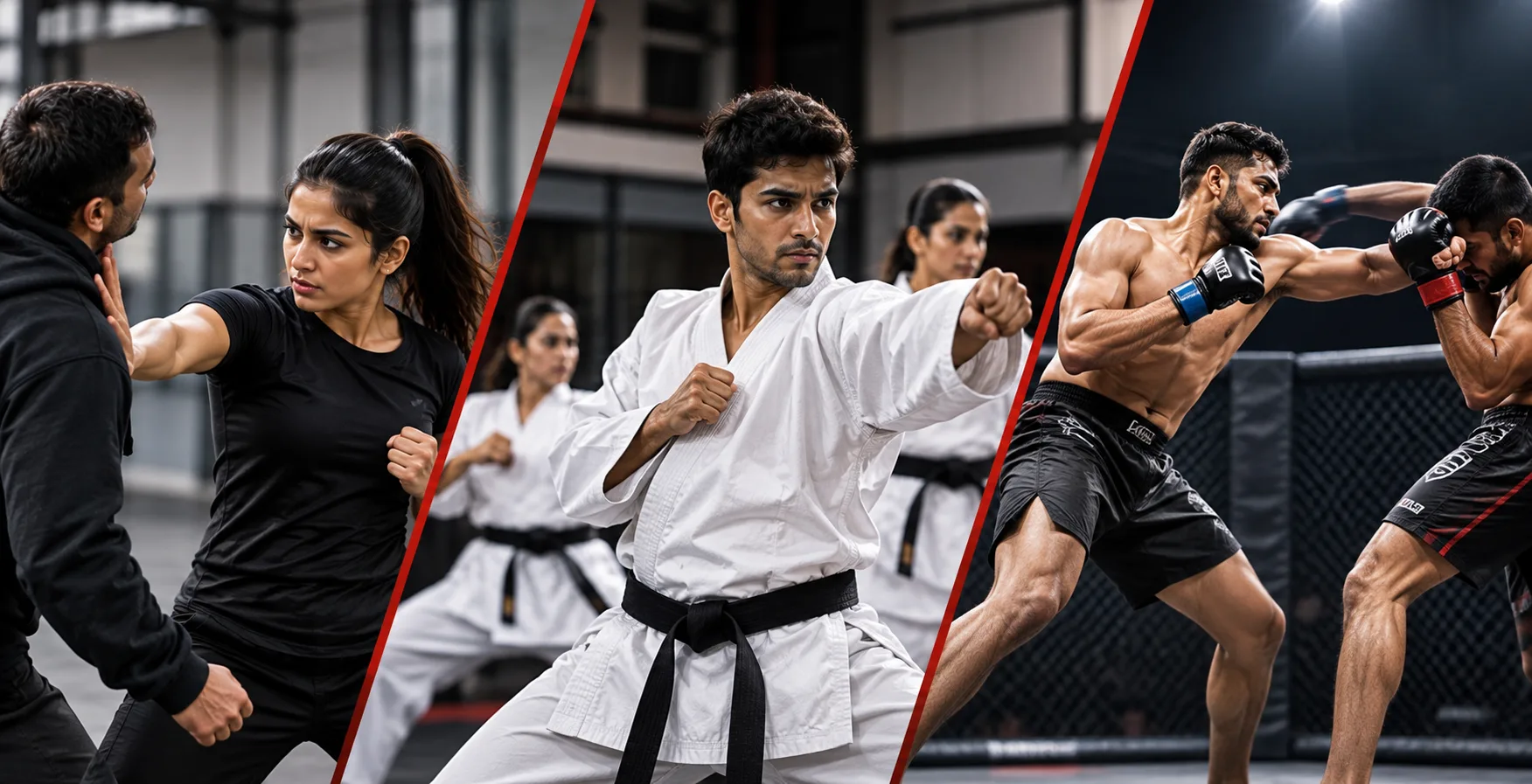
Self-defence, martial arts and match fighting are often discussed as if they are the same thing. They share physical skills, training methods and a connection to combat, but each has a different purpose. More importantly, each can have a different effect on the way a person lives, thinks, moves and handles everyday challenges.
In the traditional sense, martial arts were never just about learning how to punch, kick or defeat an opponent. Training was built around regular practice, discipline, respect, patience and self-control. These lessons still matter today. In a world where many people spend long hours sitting, rely heavily on screens and struggle to maintain consistent physical activity, traditional training offers a practical way to bring movement and discipline back into everyday life.
Self-defence has a different but equally important role. It teaches people to pay attention, recognise risks, avoid unnecessary confrontation and make sensible decisions when safety is at stake. Match fighting, meanwhile, gives people the opportunity to test their skills in a structured sporting environment, where preparation, fitness, technique and composure all matter.
The real value of understanding these three disciplines is knowing what each one can offer—not only during a training session, but over months and years of practice.
This guide explores their differences, their physical and mental benefits, their natural place in a healthy lifestyle, and how to choose a training path that can support long-term personal development.
Understanding the Three Siblings: Self-Defence, Martial Arts and Match Fighting
Before looking at the long-term impact, it is important to understand what separates these three disciplines. They may share movements and techniques, but the reasons for learning them are not identical.
1. Self-Defence: Learning to Protect Yourself in Everyday Life
Self-defence is primarily about personal safety. Its purpose is to help a person recognise danger, avoid unnecessary confrontation and respond sensibly if a threatening situation cannot be avoided.
It is not about proving physical strength or winning an argument. In fact, one of the most important lessons of good self-defence training is understanding that walking away can be the best possible outcome.
Think about everyday situations. Someone may feel uncomfortable while walking alone at night, encounter aggressive behaviour in a public place or face an argument that begins to escalate. These situations do not automatically require physical techniques. They require awareness, judgement and the ability to make a safe decision.
Practical self-defence training should help develop several abilities:
Situational awareness: Paying attention to surroundings, people and possible warning signs.
Risk recognition: Understanding when a situation may become unsafe.
Avoidance: Creating distance, changing direction or leaving an uncomfortable environment.
Decision-making: Staying as calm as possible and choosing a sensible response.
Physical confidence: Learning appropriate movements and defensive skills under qualified supervision.
Escape and help-seeking: Understanding that getting away and contacting the right people are often more important than continuing a confrontation.
These skills can be useful beyond a training hall. Awareness may help someone make a better decision while travelling, walking through an unfamiliar area or dealing with an uncomfortable social situation.
Self-defence also teaches an important personal lesson: confidence does not mean looking for trouble. It means understanding your options and knowing when not to engage.
For people who want to develop practical personal-safety skills, structured self-defence classes in Chandigarh can provide a supervised environment in which to learn and practise.
2. Martial Arts: A Traditional Path to Physical and Personal Development
Martial arts have a much wider purpose than learning how to fight. Different disciplines have different histories, techniques and teaching methods, but many traditional schools place importance on discipline, respect, patience and continuous improvement.
A student may begin training because they want to become fitter, learn self-defence, improve confidence or simply try something new. With time, the reasons for continuing often become more personal.
Regular practice teaches a person to work towards a goal without expecting immediate results. A technique may take weeks or months to improve. Balance may develop gradually. Fitness increases through consistent effort. Students learn to listen, accept correction and return to practise even when progress feels slow.
That is one of the most valuable parts of martial arts: the process itself becomes a lesson in patience.
Traditional training also gives students a routine. They attend classes, prepare their equipment, follow instructions, practise techniques and respect the people training alongside them. These simple habits can encourage greater structure in everyday life.
Depending on the discipline, martial arts training may include:
Stances, movement and balance.
Punching, kicking and blocking techniques.
Grappling, throws and controlled ground work.
Coordination and reaction exercises.
Partner drills and supervised practice.
Strength, flexibility and conditioning.
Respect, discipline and controlled behaviour.
Martial arts are not limited to one age group or one type of person. Beginners, children, adults and experienced athletes can all find a suitable starting point when the programme is adapted to their ability and experience.
3. Match Fighting: Testing Skills Through Competition
Match fighting has a more specific objective. It involves testing physical and technical ability against another competitor under agreed rules.
Boxing, kickboxing, Mixed Martial Arts (MMA), Judo, Taekwondo and Brazilian Jiu-Jitsu competitions all have their own rules and requirements.
Competition introduces a different kind of preparation. A fighter needs to understand the sport, develop the necessary techniques, improve conditioning and learn how to perform under pressure.
There is also a mental side to competitive training. Athletes must prepare for challenging sessions, accept feedback, manage nerves and learn from both victories and defeats.
Match fighting can encourage:
Goal-setting and structured preparation.
Consistent physical conditioning.
Technical improvement.
Focus and decision-making under pressure.
Respect for opponents, coaches and competition rules.
The ability to learn from mistakes.
However, match fighting is not the same as everyday self-defence. A sporting contest has rules, officials, agreed conditions and a defined objective. Real-world situations are less predictable and may involve risks that do not exist in a regulated competition.
A person interested in competing should train for the requirements of their chosen sport. Someone interested in personal safety should not assume that competition training automatically covers every aspect of self-defence.
Why Traditional Martial Arts Still Matter in Modern Life
Modern life has changed the way people work, communicate and spend their free time. Many jobs involve sitting for long periods. Entertainment is often screen-based, and daily routines can leave little time for physical activity.
This does not mean modern life is unhealthy by default. It does mean that people need to make deliberate choices about movement, fitness and personal habits.
Traditional martial arts offer one practical way to do that.
Unlike exercise routines that may feel repetitive to some people, martial arts combine physical activity with a skill that takes time to learn. Students have something to work towards. They can improve a movement, learn a new technique, develop better coordination or prepare for the next stage of training.
The combination of physical practice and learning can make the routine more engaging.
Building a Habit Instead of Chasing Quick Results
A common mistake in fitness is expecting major changes within a few weeks. People may begin exercising with enthusiasm, follow an intense routine and then stop when the results are slower than expected.
Traditional training follows a different approach. Progress is built through repetition.
A beginner may initially struggle with balance, footwork or coordination. After regular practice, those movements become more familiar. The student gradually develops better control and confidence.
This process teaches an important principle: lasting improvement usually comes from consistent effort rather than occasional bursts of motivation.
The same principle applies outside the gym. Regular practice can encourage people to become more organised with their time, more patient when learning new skills and more realistic about long-term goals.
Respect, Discipline and Self-Control
Traditional martial arts often begin with simple habits: greeting the instructor, listening carefully, respecting training partners and following class rules.
These habits may seem small, but they help create an environment where students learn to control their behaviour.
Physical ability must be accompanied by responsibility. Knowing how to perform a technique does not mean using it whenever there is a disagreement. A responsible student understands the difference between training and real life.
Self-control is especially important for younger students. They need to understand that martial arts are not a reason to intimidate others or show off. The purpose of training is to develop skills and character, not to create unnecessary conflict.
Learning to Be Patient With Yourself
Not every student learns at the same speed. Some people develop coordination quickly, while others need more time to understand basic movements.
Martial arts can teach students to accept this difference.
Instead of comparing themselves constantly with others, they learn to focus on their own improvement. A small achievement—better balance, cleaner technique or improved stamina—becomes a reason to continue.
That mindset can be valuable in education, work, relationships and other areas of life.
The Natural Physical Benefits of Regular Martial Arts Training
Martial arts training can involve aerobic activity, muscle-strengthening movements, balance work, coordination and flexibility exercises. The exact demands depend on the discipline, class structure and intensity.
The World Health Organization recommends that adults aim for 150–300 minutes of moderate-intensity aerobic physical activity each week, or an equivalent amount of vigorous activity. It also recommends muscle-strengthening activities involving the major muscle groups on at least two days per week.
These recommendations are for overall physical activity, not a requirement to complete every minute through martial arts. Walking, cycling, household activity, sport and other forms of exercise can all contribute.
Regular martial arts classes can form one part of a balanced weekly routine.
1. Improving Cardiovascular Fitness
Many martial arts sessions include warm-ups, footwork, movement drills, combinations and conditioning exercises. These activities can raise the heart rate and challenge the cardiovascular system.
With appropriate and consistent training, people can work towards better exercise tolerance and stamina.
For example, a beginner may initially need frequent breaks during a class. Over time, they may find it easier to complete warm-ups, move through drills and maintain their technique for longer periods.
The important point is to build fitness gradually. Training intensity should match the student’s age, experience and physical condition.
2. Developing Functional Strength
Martial arts use the body in different ways. Punching, kicking, maintaining a stance, changing direction and controlling movement all require muscles to work together.
Training may help develop strength in the legs, hips, core, shoulders and upper body, depending on the exercises included.
This type of movement can support everyday physical tasks, such as climbing stairs, carrying shopping, getting up from the floor or maintaining balance while moving.
However, martial arts classes should not automatically replace all forms of strength training. A well-rounded fitness routine may also include suitable resistance exercises that target the major muscle groups.
3. Improving Balance and Coordination
Balance and coordination are essential parts of martial arts.
Students learn to maintain stable positions, move between stances, coordinate their hands and feet and respond to changing movements.
These skills develop through repeated practice. They may also make everyday movements feel more controlled.
Traditional movement practices such as Tai Chi use slow, controlled actions and focused breathing. The US National Center for Complementary and Integrative Health reports that research suggests Tai Chi may help improve balance and stability in some older adults and may reduce falls in certain groups.
This does not mean every martial art produces the same results. Different disciplines have different movements and training demands.
4. Supporting Flexibility and Mobility
Martial arts often involve controlled movements through different ranges of motion. Warm-ups, mobility exercises, kicking drills and stretching may help students work on their flexibility.
For example, a beginner learning a basic kick may initially have limited range of movement. With appropriate practice, they can work on technique, balance and mobility without forcing the body into uncomfortable positions.
Flexibility should develop gradually. Stretching aggressively or trying to copy an advanced student’s movements can increase the risk of injury.
5. Supporting Healthy Weight Management
Physical activity uses energy, and regular movement can support weight management when combined with balanced eating and adequate recovery.
Martial arts may be an enjoyable way to stay active because the training involves learning skills rather than simply repeating the same exercise.
However, no martial art guarantees weight loss. Results depend on several factors, including training frequency, overall activity, nutrition, sleep, health and individual circumstances.
The most useful approach is to focus on a sustainable routine rather than extreme training or quick fixes.
The Mental and Emotional Impact of Long-Term Training
Physical changes are only one part of the picture. A consistent training routine can also influence how people approach challenges, manage their time and respond to pressure.
These benefits are not automatic, and they do not replace professional mental-health care. They are potential lifestyle benefits that can develop through regular activity and a supportive training environment.
Confidence Through Practical Progress
Confidence is often stronger when it comes from experience rather than appearance.
A student who learns a new technique, improves their fitness or completes a challenging class has a clear reason to feel more capable.
This confidence may gradually influence other areas of life. A person may become more comfortable trying unfamiliar activities, speaking up in a group or working towards a difficult goal.
For beginners, progress should be measured against their own starting point. There is no need to compare every achievement with an experienced athlete.
Better Focus and Attention
During martial arts practice, students need to listen, observe and respond. They must remember instructions, follow movement patterns and pay attention to their training partners.
This requires concentration.
A class can give students a structured period away from daily distractions. They have a specific activity to focus on, and they receive immediate feedback from an instructor.
Over time, practising this kind of attention may help students become more comfortable with structured tasks and learning new skills.
Learning to Manage Pressure
Training can include difficult drills, unfamiliar movements and physically demanding exercises. Students learn to keep working while managing effort and frustration.
Competitive training adds another challenge. Athletes may experience nervousness before a match or disappointment after a result.
A good coach helps students understand that pressure is part of learning. They should prepare properly, follow the rules, respect their opponent and learn from the experience.
The aim is not to remove every feeling of pressure. It is to develop the ability to respond thoughtfully.
A Healthy Outlet for Everyday Stress
Physical activity can support emotional well-being. The CDC reports that regular physical activity can improve sleep, reduce feelings of anxiety and provide wider long-term health benefits.
For some people, martial arts classes offer a practical way to make time for movement and focus during a busy week.
A student arrives, warms up, practises, learns and finishes the session. That routine can provide a useful break from work, study and other daily responsibilities.
It should not be presented as a cure for stress, anxiety or depression. Anyone experiencing ongoing mental-health difficulties should seek appropriate professional support.
How Self-Defence Can Change the Way You Approach Everyday Situations
Self-defence training has a practical value that goes beyond physical techniques. It encourages people to think about safety before a situation becomes dangerous.
A person who understands basic personal-safety principles may become more attentive to their surroundings and more willing to avoid unnecessary risks.
Awareness Before Action
Awareness is the first step. It means noticing what is happening around you instead of moving through every situation without paying attention.
This may include recognising an uncomfortable environment, knowing where exits are or noticing when someone’s behaviour changes.
Awareness does not mean becoming suspicious of everyone. It means being present and making sensible decisions.
Avoidance Is a Strength
People sometimes associate self-defence with fighting. In reality, avoiding a confrontation is often the safest decision.
Leaving an argument, changing direction, asking for help or moving towards a safer public place may prevent a situation from becoming worse.
This is an important lesson for children, teenagers and adults alike. Physical techniques should never be treated as the first response to every disagreement.
Physical Skills as a Last Resort
If a person cannot avoid a threatening situation, appropriate physical skills may become relevant.
These should be learned through supervised practice, with attention to personal ability, safety and applicable laws.
A responsible self-defence programme should explain the limits of physical techniques. It should not promise that a student will be able to defeat every attacker or handle every possible situation.
The priority remains personal safety, escape and seeking help.
Match Fighting and Its Role in Personal Development
Not everyone who joins a martial arts academy wants to compete. Some people train for fitness, confidence or personal development. Others enjoy the challenge of preparing for a sporting event.
Match fighting offers a clear goal for students who want to test their abilities.
Training With a Clear Target
Preparing for a competition gives an athlete a defined objective. They know which sport they are entering and what skills they need to develop.
A structured programme may include:
Technical practice based on the sport’s rules.
Strength and conditioning.
Cardiovascular fitness.
Footwork, movement and timing.
Tactical preparation.
Recovery and rest.
Supervised practice with suitable training partners.
The exact programme should depend on the athlete’s age, experience, competition level and physical condition.
Learning From Winning and Losing
Competition can teach lessons that are difficult to reproduce in ordinary training.
An athlete may perform well and win, or discover weaknesses that need attention. Either outcome can provide useful feedback.
Winning should not become the only measure of success. Improvement in technique, preparation, discipline and sportsmanship also matters.
A student who learns to accept a result, respect an opponent and return to training with a clear plan is developing more than physical ability.
Understanding the Difference Between Sport and Self-Defence
A competition has a defined environment. There are rules, officials and specific conditions that athletes prepare for.
Everyday personal-safety situations are different. They may involve unfamiliar surroundings, more than one person, restricted spaces or other unpredictable factors.
MMA and other combat sports can develop valuable physical skills, but they should not be described as complete substitutes for personal-safety education.
Understanding this difference helps students choose training based on their real goals.
The Long-Term Lifestyle Impact: What Can Change After One, Three and Five Years?
The value of training is easier to understand when viewed over time. One class may introduce a new skill, but a consistent routine can create a much larger change in lifestyle.
There is no fixed timeline for progress. Every student develops differently, and results depend on training quality, frequency, recovery and individual circumstances. The following stages are examples of what a consistent student may work towards.
The First Three Months: Building the Foundation
The first stage is about learning how to train safely and regularly.
A beginner may focus on:
Understanding basic movements and class rules.
Learning simple stances, footwork and techniques.
Developing comfort with physical activity.
Improving basic coordination.
Building a weekly routine.
Becoming familiar with the instructor and training environment.
The biggest achievement during this stage may be consistency.
Instead of expecting a dramatic physical transformation, a beginner should focus on attending classes, learning the basics and allowing the body to adapt.
Six Months to One Year: Developing Consistency and Confidence
After several months of regular practice, students may become more comfortable with the training environment.
They may understand instructions more quickly, perform basic techniques with better control and manage a class with less difficulty.
Other possible developments include:
Better familiarity with training movements.
Improved exercise tolerance.
Greater comfort working with partners.
More confidence in learning new skills.
A stronger sense of routine.
Clearer understanding of personal goals.
At this stage, students can discuss their progress with the instructor and decide whether to continue with general training or focus on a particular discipline.
One to Three Years: Building Skill and Personal Discipline
Longer-term practice gives students more time to develop technique and understand the principles behind their training.
They may begin exploring more advanced movements, improving their conditioning or working towards grading and competition goals where the discipline offers them.
The lifestyle impact can also become more noticeable.
Training may become a regular part of the weekly schedule. Students may plan their time around classes, pay more attention to recovery and become more aware of how their daily habits affect performance.
The key is to keep training balanced. More practice is not always better if it comes at the cost of recovery, family responsibilities, work or health.
Beyond Three to Five Years: Making Training Part of Your Lifestyle
For people who continue for several years, martial arts can become more than a hobby.
It may become a long-term interest that supports physical activity, learning and social connection.
Experienced students may continue developing their technique, help beginners understand basic movements or explore new training goals.
Some may choose competition. Others may prefer recreational practice, fitness or traditional skill development.
There is no requirement to become a professional athlete. Long-term value can come from simply staying active, learning consistently and enjoying the process.
A Practical Weekly Plan for a Natural and Sustainable Training Routine
A good training plan should fit into real life. It should not require someone to change everything overnight or train at maximum intensity every day.
The best starting point is a routine that can be maintained alongside work, education, family responsibilities and rest.
The following is an illustrative plan for a healthy adult beginner. It should be adjusted according to fitness level, age, experience and any relevant health advice.
Monday: Martial Arts Fundamentals
Attend a beginner-friendly martial arts class.
Focus on basic stances, movement, coordination and technique. The aim is to learn correctly rather than move as quickly as possible.
Tuesday: Light Activity and Recovery
Choose an easy walk, gentle mobility work or another comfortable activity.
Recovery days are useful because the body needs time to adapt to training.
Wednesday: Martial Arts or Self-Defence Practice
Attend a supervised class that focuses on technique, awareness and controlled partner drills.
Ask the instructor to explain the purpose of each exercise so that you understand what you are practising.
Thursday: Strength and General Fitness
Include suitable bodyweight or resistance exercises that work the major muscle groups.
A beginner may start with simple movements such as supported squats, wall push-ups and controlled core exercises, provided they are comfortable and appropriate.
Friday: Rest or Gentle Movement
Use this day to recover. A short walk or light stretching may be enough.
Saturday: Martial Arts, Kickboxing or MMA Fundamentals
Choose a class that matches your goal.
Someone interested in general fitness may enjoy kickboxing. A student interested in broader combat-sport skills may explore MMA fundamentals. Beginners should follow the instructor’s guidance and avoid rushing into advanced sparring.
Sunday: Rest and Weekly Review
Take a rest day and review the week.
Consider what improved, which movements felt difficult and whether the schedule was manageable.
The aim is to build a routine that can continue for months and years, not one that feels exhausting after two weeks.
Natural Lifestyle Habits That Support Martial Arts Training
Training is only one part of a healthy lifestyle. Everyday habits influence how a person feels, recovers and performs during class.
A natural approach does not need complicated products, extreme diets or unrealistic routines. It starts with basic habits that are practical to maintain.
Eat Balanced Meals
The body needs enough energy and nutrients to support regular activity.
A balanced eating pattern can include vegetables, fruits, whole grains, pulses, suitable protein sources and healthy fats. The right amounts depend on individual needs, activity levels and health circumstances.
There is no need for a beginner to follow an extreme diet simply because they have joined a martial arts academy.
Drink Enough Water
Hydration matters, particularly during warm weather and physically demanding sessions.
Students should drink water regularly throughout the day and pay attention to thirst, training conditions and individual needs.
Give Your Body Time to Recover
Muscles and other tissues need recovery after demanding exercise.
Sleep, rest days and sensible training intensity all contribute to a sustainable routine. Training through significant pain or ignoring repeated injuries is not a sign of discipline.
Keep Daily Movement in Your Routine
A martial arts class is valuable, but it does not need to be the only time you move.
Walking, taking stairs when appropriate, cycling and spending less time sitting can help increase everyday activity.
The World Health Organization highlights that physical activity can come from sport, transport, work, leisure and everyday tasks. Small amounts of movement still count.
Avoid Comparing Your Progress With Others
Every person begins with a different level of fitness, flexibility, coordination and experience.
A beginner should not expect to perform like someone who has trained for years.
Measure progress by looking at your own consistency, technique, confidence and ability to complete training safely.
How to Choose the Right Martial Arts Training for Your Goals
The best training option is not necessarily the most popular or the one that looks most impressive. It is the one that matches your purpose and gives you a suitable environment to learn.
Before joining a programme, consider the following questions.
What Do You Want to Achieve?
Be clear about your main reason for joining.
Personal safety: Look for self-defence education that includes awareness, avoidance and responsible physical training.
Fitness: Consider martial arts or kickboxing classes that combine movement, conditioning and skill development.
Traditional learning: Explore disciplines that focus on technique, discipline, structured progression and personal development.
Competition: Choose a programme that prepares students for the rules and requirements of the chosen sport.
General confidence: Look for a supportive beginner-friendly class where students can improve at a manageable pace.
Is the Instructor Qualified and Responsible?
A good instructor should explain techniques clearly, supervise students and adapt exercises when necessary.
They should also be honest about what the programme teaches. Be cautious of anyone promising guaranteed results, instant fighting ability or complete protection from every threat.
Is the Training Environment Suitable?
A clean, organised and properly supervised training space matters.
Students should have suitable equipment, enough room to practise and clear rules for partner work and sparring.
Beginners should not be pressured into hard sparring before they have developed the necessary skills and understanding.
Can You Maintain the Schedule?
A programme may look excellent, but it will not be useful if the timings are impossible to maintain.
Choose a schedule that works with your normal routine. Two or three consistent sessions may be a more realistic starting point than attempting to train every day.
Why Children and Adults Can Both Benefit From Martial Arts
Martial arts can be adapted for different age groups, although class structure, intensity and teaching methods should reflect the needs of each student.
Martial Arts for Children
Children can use structured martial arts classes as an opportunity to practise movement, coordination, listening and following instructions.
A well-run class should encourage respect, patience and safe behaviour. Children should understand that techniques are for supervised training and should never be used to bully or intimidate others.
For parents, it is worth asking about the instructor’s experience with children, class supervision, safety procedures and the way progress is assessed.
Martial Arts for Adults
Adults may join for fitness, personal safety, stress management, competition or simply the enjoyment of learning a new skill.
There is no need to have an athletic background before starting. A suitable beginner programme should introduce movements gradually and allow students to develop at their own pace.
Adults returning to exercise after a long break should also avoid doing too much too soon.
Training as a Family
Some families enjoy having a shared interest in physical activity. Where suitable classes are available, parents and children can develop their skills in age-appropriate training groups.
The most important thing is that each person receives instruction suited to their ability. Children and adults do not need to follow the same training intensity to enjoy the same discipline.
Training Safely: The Foundation of Long-Term Progress
A long-term training routine depends on safety. Physical activity has many benefits, but martial arts and combat sports also involve physical demands and a risk of injury.
A responsible academy should make safety part of every class.
Students should begin with an appropriate warm-up, learn techniques step by step and use suitable protective equipment when required.
Sparring should be controlled and supervised. Training partners should respect each other’s experience and physical limits.
Students should also understand the difference between normal exercise effort and pain that may indicate an injury. Persistent pain, dizziness, unusual breathlessness or other concerning symptoms should not be ignored.
People with existing health conditions, significant injuries or concerns about starting vigorous exercise should seek advice from an appropriate healthcare professional before beginning or changing their training routine.
The goal is not to train as hard as possible every day. It is to train consistently, recover properly and continue improving without unnecessary risks.
The Future of Martial Arts: Keeping Traditional Values in a Modern World
Technology has changed how people learn. Online videos, fitness applications and digital training programmes can help students understand movements and follow general exercise routines.
However, martial arts still depend heavily on practical instruction.
A video cannot fully replace an instructor who can observe a student’s movement, correct technique and supervise partner practice. Physical training also requires an understanding of timing, distance, balance and safe interaction with others.
The future of martial arts does not need to reject modern tools. It can use them while keeping the traditional values that make training meaningful.
These values include:
Respect for instructors and training partners.
Patience with the learning process.
Discipline in regular practice.
Humility when receiving feedback.
Responsibility when applying physical skills.
Commitment to continuous improvement.
The best approach combines useful modern knowledge with the lessons that have made traditional training valuable for generations.
Why Kings Academy of Martial Arts Is a Place to Begin Your Training Journey
Choosing the right academy is an important step. Students need an environment where they can learn the fundamentals, develop their physical abilities and work towards personal goals under suitable supervision.
At Kings Academy of Martial Arts, students can explore different areas of martial arts and combat-sport training according to their interests and experience.
Those interested in traditional skill development can explore martial arts classes in Chandigarh. Students who want to improve their striking skills can learn more about the kickboxing academy in Chandigarh. People who want to focus on personal safety can explore self-defence classes in Chandigarh.
For students interested in mixed combat-sport skills, the academy also provides a starting point to explore MMA training.
Before choosing a class, consider your goals, current fitness level and available training time. Speak with the academy about the right starting point rather than choosing a class only because it looks challenging.
A good training journey begins with the right expectations. Learn the basics, practise consistently and give yourself time to improve.
Final Thoughts: Train for a Better Way of Living, Not Just for a Fight
Self-defence, martial arts and match fighting are three related disciplines, but they offer different experiences.
Self-defence teaches awareness, avoidance and responsible personal safety. Martial arts provide a traditional path towards physical development, discipline, patience and self-improvement. Match fighting allows athletes to test their abilities through structured competition.
Each has its own value.
The greatest benefit of regular training is not limited to what happens inside an academy. It can be the habit of staying active, the patience to learn something difficult, the confidence that comes from gradual progress and the understanding that physical ability must be matched with responsibility.
You do not need to become a professional fighter to benefit from martial arts. You do not need to win a competition to feel proud of your progress. And you do not need to train at maximum intensity to build a healthier routine.
Start with a realistic plan. Learn from a responsible instructor. Respect your limits, make time for recovery and remain consistent.
The traditional approach has always been simple: practise regularly, respect the process and keep improving.
Train for fitness. Learn for confidence. Practise for discipline. And remember that the strongest person is not always the one who fights, but often the one who knows when not to.