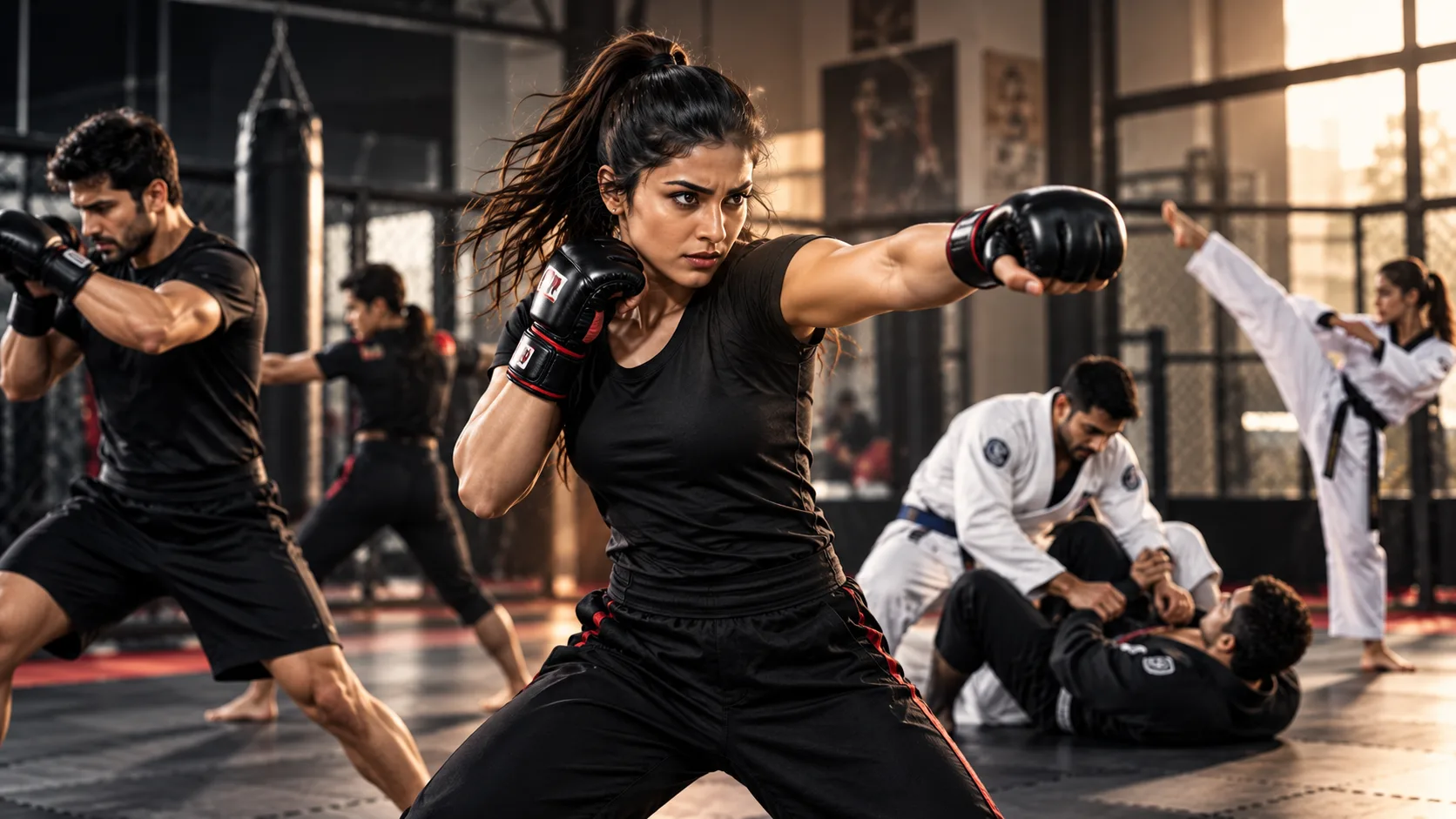
Martial arts is about much more than learning how to punch, kick, block or defend yourself. It is a way to train the body, develop the mind and build habits that can support a healthier lifestyle for years to come.
In a world where many people spend long hours sitting at desks, working on computers, travelling and managing daily responsibilities, finding a physical activity that is both useful and enjoyable can be a challenge. Going to the gym is one option. Walking, running and cycling are others. But for people who want to develop physical fitness while learning a practical skill, martial arts training offers a different approach.
Every session gives you something to work on. You might practise your stance, improve your footwork, learn a new combination, work on balance or repeat a technique until it feels more natural. The process takes patience. Progress rarely happens overnight, but regular practice can gradually change how you move, how you handle challenges and how you feel about your own abilities.
The benefits can extend well beyond the training floor. Better physical conditioning may make everyday activities feel easier. Learning a difficult technique can teach patience. Working with a coach can help develop discipline. And seeing your skills improve through consistent effort can build a more grounded form of self-confidence.
At Kings Academy of Martial Arts Chandigarh, students can explore different disciplines, including MMA, boxing, kickboxing, Brazilian Jiu-Jitsu (BJJ), Taekwondo and self-defence training. Each discipline has its own techniques and training methods, but they share several foundations: movement, practice, respect, control and consistency.
The purpose is not simply to become stronger for one day or stay motivated for a few weeks. It is to build a routine that supports your health, personal development and everyday life over the long term.
In this guide, we will explore how martial arts training supports fitness, discipline and self-confidence, why traditional training principles remain useful today, and how beginners can build a sustainable practice that fits their lifestyle.
What Is Martial Arts Training?
Martial arts training involves learning structured physical skills that may include striking, grappling, defensive movement, balance, coordination, footwork and controlled partner practice. Depending on the discipline, training may also include conditioning, flexibility, strength exercises and forms or patterns of movement.
Different martial arts develop different abilities.
-
Boxing focuses on punches, footwork, defence, timing and distance.
-
Kickboxing combines punching and kicking with movement, coordination and conditioning.
-
Mixed Martial Arts (MMA) combines striking, wrestling, takedowns and ground-based skills.
-
Brazilian Jiu-Jitsu (BJJ) focuses on grappling, positional control, escapes and submissions.
-
Taekwondo emphasises kicking techniques, balance, flexibility, timing and structured movement.
-
Self-defence training focuses on awareness, avoidance, boundaries, escape and practical responses to unsafe situations.
Although these disciplines differ, most require students to listen carefully, practise basic movements, accept feedback and improve through repetition.
That is what makes martial arts different from simply exercising without a specific skill to learn. You are not only working your body. You are also training coordination, concentration and decision-making.
You do not need to be athletic before starting. Beginners can learn the fundamentals gradually, with the training load adjusted to their current fitness, age, experience and goals.
How Martial Arts Training Improves Physical Fitness
Physical fitness is not one single thing. It includes cardiovascular endurance, muscular strength, flexibility, balance, coordination and the ability to perform everyday movements without becoming unnecessarily exhausted.
A well-planned martial arts programme can work on several of these areas in the same session.
For example, a class may begin with a warm-up, move into footwork and technique drills, include pad work or grappling practice, and finish with conditioning. The exact structure depends on the discipline and the student’s level.
This variety can make training interesting while giving the body different challenges.
The World Health Organization recognises regular physical activity as an important part of maintaining physical and mental health. Its recommendations encourage adults to accumulate 150–300 minutes of moderate-intensity aerobic activity each week, or an equivalent amount of vigorous activity, and to perform muscle-strengthening activities on at least two days per week.
Martial arts can contribute to these goals, although the amount of activity and the intensity of each session vary. Students may need additional walking, strength training or other physical activities to meet their individual fitness goals.
1. Cardiovascular Endurance
Cardiovascular endurance refers to the ability of your heart and lungs to support sustained physical activity.
During a martial arts class, you may move continuously for several minutes, perform combinations, change direction, work with a partner or complete conditioning exercises. These activities can challenge your cardiovascular system, especially when the training is appropriately paced.
Over time, regular practice can help you become more comfortable with physical effort.
You may notice that you can complete a round with better control, recover more comfortably between drills or maintain your footwork for longer.
These improvements depend on training frequency, intensity, recovery and your starting fitness level. They do not happen at the same speed for everyone.
2. Strength and Muscular Endurance
Martial arts use the body as a coordinated system.
Punching requires control through the legs, hips, torso and upper body. Kicking requires balance, hip movement and leg strength. Grappling requires the ability to control body position, stabilise joints and maintain effort while moving against resistance.
Depending on the discipline, classes may also include squats, push-ups, planks, resistance exercises and other conditioning drills.
These activities can help develop muscular endurance and movement control. However, if your goal is to maximise strength or muscle growth, dedicated progressive resistance training may also be necessary.
The important point is to match the training to your goal rather than expect one activity to meet every fitness need.
3. Balance and Coordination
Balance becomes especially important when learning kicks, defensive movements, takedowns or grappling techniques.
A beginner might initially struggle to maintain a stable stance while moving the hands and feet together. With repeated practice, the student learns how to distribute weight, control movement and adjust body position.
Coordination also develops through repetition. You learn to connect individual actions into a smooth sequence rather than think about every movement separately.
This can make physical activity feel more natural and controlled. Balance and coordination are also useful during everyday tasks, recreational sports and activities that require changing direction or maintaining stability.
4. Flexibility and Mobility
Flexibility refers to how far a joint or muscle can move, while mobility involves controlling that movement.
Both matter in martial arts.
Kickboxing and Taekwondo involve kicking movements that require appropriate hip mobility. Boxing requires movement through the shoulders and torso. Brazilian Jiu-Jitsu and MMA involve changing positions, turning and moving through different ranges of motion.
A good programme introduces these movements progressively. Warm-ups, mobility drills and suitable stretching can help prepare the body for training.
There is no need to force a high kick or advanced position before you are ready. Progress comes from consistent practice, not from pushing through pain.
The Mental Benefits of Martial Arts Training
Physical fitness is only part of the picture. Martial arts also require attention, patience and the ability to respond to feedback.
When you learn a new technique, you have to understand the instruction, remember the sequence and apply it while moving. You may need to correct your stance, adjust your timing or repeat a movement several times before it feels right.
That process provides a practical reason to concentrate.
Research on physical activity more broadly supports benefits for mental health, cognitive health, sleep and overall well-being. However, the size and type of benefit vary between individuals, and martial arts should not be presented as a guaranteed treatment for stress or mental health conditions.
5. Better Focus and Concentration
Martial arts training encourages you to pay attention to details.
Where are your feet positioned? Are you maintaining your balance? Is your guard in the right place? Are you following the coach’s instructions? Are you moving with control?
These questions require you to stay engaged with the task.
For students who spend most of the day switching between messages, emails and screens, a training session can provide a welcome change. Instead of dividing your attention between several tasks, you have a specific skill to practise.
That does not mean martial arts automatically improve concentration in every area of life. But the habit of listening carefully, practising deliberately and correcting mistakes is valuable in its own right.
6. Patience and Emotional Control
Progress in martial arts can be slow.
A technique that looks simple when performed by an experienced student may take a beginner several weeks to understand. Sometimes you will improve quickly. At other times, you may feel that you are repeating the same mistakes.
This is where patience becomes part of the training.
You learn to accept correction without treating it as failure. You learn that frustration is normal when developing a new skill. You also learn to slow down, regain control and try again.
In partner training, emotional control is particularly important. Students must respect one another, follow instructions and understand that training is a shared responsibility.
The objective is not to prove that you are tougher than everyone else. It is to become more skilled while keeping yourself and others safe.
7. Managing Everyday Stress
Many people finish a working day with little physical activity and a mind full of unfinished tasks.
A martial arts class creates a clear break in that routine. You change clothes, warm up, move, learn and concentrate on something outside your usual responsibilities.
Physical activity can support mood and general well-being, while a regular routine can provide structure to the week.
Some people enjoy the social aspect of training. Others appreciate having a goal to work towards. Some simply value the opportunity to spend an hour being physically active.
You do not have to feel completely relaxed after every class for it to be worthwhile. A demanding session can leave you tired. What matters is finding an appropriate balance between training, recovery and the rest of your life.
If stress or anxiety is persistent or affecting daily functioning, exercise can be one supportive habit, but it should not replace professional care when needed.
How Martial Arts Builds Genuine Self-Confidence
Confidence is often described as if it were something a person either has or does not have. In practice, it can develop through experience.
Think about learning to ride a bicycle, swim or drive. At first, you have to concentrate on every step. You may feel uncertain. With practice, you become more familiar with the process.
Martial arts works in a similar way.
You learn a stance. You practise a basic movement. You receive feedback. You try again. Eventually, you perform the movement with greater control.
The confidence comes from having done the work.
8. Learning to Handle Challenges
Beginners sometimes feel uncomfortable when they cannot immediately perform a technique.
That discomfort is not a sign that they do not belong in the class. It is a normal part of learning.
A good coach breaks complex skills into manageable steps. Students learn the basics before moving to more advanced techniques.
This gives you a chance to experience progress rather than judge yourself against someone who has been training for years.
The lesson is useful outside martial arts too. You do not need to master everything immediately. You need to be willing to learn, accept feedback and keep practising.
9. Confidence Without Aggression
Real self-confidence does not require aggressive behaviour.
Martial arts can teach respect for other people’s abilities, the importance of control and the risks associated with physical confrontation. Students should learn when to engage in training, when to stop and why techniques must be used responsibly.
For people interested in personal safety, this distinction is particularly important.
Self-defence training should emphasise awareness, prevention, creating distance and escaping unsafe situations. Physical techniques are only one part of a broader approach to safety.
The aim is not to encourage confrontation. It is to help students become more aware of their options.
10. Progress You Can Actually Measure
Confidence becomes easier to recognise when you track practical improvements.
Instead of asking whether you have become a completely different person, consider questions such as:
-
Can I complete more of the class without stopping?
-
Is my balance better than it was last month?
-
Can I remember a combination more easily?
-
Am I more comfortable asking the coach questions?
-
Can I practise with a partner while maintaining control?
-
Have I become more consistent with my training schedule?
These are realistic signs of progress.
They also help prevent you from measuring your development only against other people. Your most useful comparison is often with your own starting point.
The Role of Traditional Martial Arts Values in Modern Life
Martial arts have long emphasised fundamentals, repetition, respect and discipline. These values remain relevant even as training methods, equipment and sports science continue to develop.
The traditional approach is straightforward: learn the basics properly, practise regularly, respect your coach and training partners, and improve one step at a time.
This approach can fit naturally into modern life.
11. Discipline Through Routine
Discipline is often confused with motivation.
Motivation is the feeling that makes you want to start. Discipline is the habit that helps you continue when the initial excitement fades.
You may feel enthusiastic about your first few classes. After a busy week at work, however, you may find it harder to make time for training. A consistent schedule helps you avoid making the decision from scratch every time.
For example, if you plan to attend classes on Monday, Wednesday and Friday, you can organise your work and other responsibilities around those sessions.
You will not always manage to follow the plan perfectly. That is fine. The goal is to return to your routine rather than abandon it after one missed class.
This is one of the most practical lessons martial arts can offer: consistency matters more than occasional bursts of effort.
12. Respect for Coaches and Training Partners
Traditional martial arts place considerable importance on respect.
That means listening to instructions, arriving prepared, following safety rules and treating other students properly.
It also means understanding that people progress at different rates. A beginner may need more time to learn a technique, while an experienced student may be working on more advanced details.
Good training environments make room for both.
Respect does not mean that you should never question an instruction or raise a safety concern. It means approaching learning responsibly and recognising that everyone shares the responsibility of making training productive and safe.
13. Learning to Accept Feedback
Feedback is part of every skill-based activity.
A coach may correct your stance, point out that you are losing balance or ask you to slow down and repeat a movement.
It can be tempting to take correction personally. But the purpose of coaching is to help you improve.
When you learn to separate feedback about your technique from your value as a person, learning becomes easier.
This principle also applies to professional life, education and personal development. Mistakes provide information. You can use that information to adjust your approach.
Choosing the Right Martial Arts Discipline
Not every martial art offers the same experience. The right choice depends on your interests, goals, fitness level and preferred style of training.
At Kings Academy of Martial Arts Chandigarh, students can explore several disciplines under one academy. The academy describes its programmes as serving beginners, children, fitness enthusiasts and competitive athletes.

Boxing
Boxing focuses on punches, footwork, defensive movement, timing and distance. It can suit people who want structured striking practice alongside cardiovascular conditioning and coordination work.

Kickboxing
Kickboxing combines punches and kicks with movement, balance and conditioning. It can be an engaging choice for people who enjoy learning combinations while working on fitness.

Mixed Martial Arts (MMA)
MMA combines striking, grappling, takedowns and ground techniques. Training can offer a broad introduction to different combat-sport skills, with the intensity adjusted to the student’s level.

Brazilian Jiu-Jitsu (BJJ)
BJJ emphasises grappling, positional control, escapes and submissions. Students learn to understand body position, leverage and technique while practising with a partner.

Taekwondo
Taekwondo features structured techniques, kicking skills, balance and movement. Depending on the class, training may also include forms, patterns, controlled sparring and flexibility work.
Self-defence training is another option for people whose primary interest is practical personal safety. It can incorporate awareness, communication, escape techniques and selected physical skills.
You do not have to choose the most demanding discipline to get started. Choose something that interests you and that you can practise consistently.
Martial Arts Training for Different Stages of Life
One reason martial arts can become a long-term habit is that people can approach it with different goals at different stages of life.
Martial Arts for Beginners
If you have never trained before, focus on learning rather than performance.
Start with basic movement, simple techniques, balance and conditioning. Ask questions when something is unclear. Tell your coach if you need a modification or extra time to practise.
You do not need to match the pace of experienced students.
A well-structured beginner programme should help you build a foundation before introducing more demanding exercises.
Martial Arts for Working Professionals
People with desk-based jobs often spend much of the day sitting. Training offers an opportunity to move, focus on a practical skill and establish a regular activity outside work.
A fixed class can also help create a boundary between professional responsibilities and personal time.
You may not be able to attend every session during a busy week. The answer is to build a realistic schedule, not to expect yourself to train perfectly.
Martial Arts for Children and Teenagers
For children and teenagers, martial arts can provide structured physical activity and opportunities to practise listening, coordination, patience and respect.
The quality of instruction matters. Classes should be age-appropriate, properly supervised and focused on safe skill development rather than encouraging aggression.
The WHO recommends that children and adolescents aged 5–17 average at least 60 minutes of moderate-to-vigorous physical activity per day across the week, with vigorous aerobic and muscle- and bone-strengthening activities included at least three days per week.
Martial arts can be one component of that activity, alongside outdoor play, walking, cycling and other sports.
Martial Arts for Adults Returning to Exercise
If you have been inactive for a long time, you do not need to begin with intensive training.
Start at a manageable level. Allow time to learn the techniques and recover between sessions. Increase the workload gradually as your fitness and confidence improve.
If you have an existing injury, a health condition or concerns about whether vigorous exercise is appropriate, seek guidance from a qualified healthcare professional before beginning demanding training.
How to Build a Sustainable Martial Arts Routine
A long-term routine should fit your actual life, not an ideal schedule that is impossible to maintain.
You need enough training to make progress, enough recovery to adapt and enough flexibility to manage your other responsibilities.
A practical weekly plan
Here is an example for a beginner who wants to build fitness without training every day.
| Day | Activity | Main purpose |
|---|---|---|
| Monday | Martial arts class | Technique and movement |
| Tuesday | Walking or light activity | General fitness and recovery |
| Wednesday | Martial arts class | Skill practice and conditioning |
| Thursday | Rest or gentle mobility | Recovery |
| Friday | Martial arts class or strength training | Consistent practice |
| Saturday | Walking, cycling or recreational activity | Active lifestyle |
| Sunday | Rest | Recovery and preparation |
This is an example rather than a fixed prescription. Your schedule should depend on your current fitness, training intensity, recovery, goals and any health considerations.
The important thing is to avoid treating every session as a test of how hard you can push yourself.
Start with a manageable commitment
If you are new to training, two classes a week may be a reasonable starting point, provided the intensity suits your ability. You can adjust the frequency as you become more comfortable.
Pay attention to how you feel after sessions. Persistent pain, unusual fatigue or repeated difficulty recovering may indicate that you need to reduce the workload or seek professional advice.
Track your progress
You do not need expensive equipment or complicated measurements.
A simple training log can record:
-
The classes you attended
-
Techniques you learned
-
Movements you found difficult
-
Your energy and recovery
-
Changes in balance, coordination or endurance
-
Goals for your next session
Review your progress every four weeks.
You may not notice a major change after every class, but a record can help you recognise improvements that would otherwise be easy to overlook.
What to Expect During Your First Month
Your first month should establish the foundation for future training.
Week 1: Learn the basics
Focus on stance, movement, warm-ups, basic techniques and understanding the class structure. Give yourself time to become comfortable in the training environment.
Week 2: Build coordination
Practise simple combinations, balance and footwork. Focus on doing the movements correctly rather than trying to perform them quickly.
Week 3: Develop consistency
Repeat the techniques you have learned and begin recognising where you need improvement. Listen to your coach and use feedback to make adjustments.
Week 4: Review and adjust
Look at what feels easier, what still needs practice and how well the schedule fits your life. Increase training demands only when appropriate.
At the end of the first month, you do not need to know dozens of techniques. You should be developing a basic understanding of the discipline and a routine you can continue.
The Importance of Recovery, Nutrition and Sleep
Training creates a stimulus. Recovery gives the body time to adapt.
If you train hard but regularly sleep poorly, eat inadequately or ignore persistent soreness, your progress may suffer.
A sustainable martial arts lifestyle includes several simple habits.
Eat balanced meals. Include a variety of vegetables, fruit, whole grains, protein sources and other foods that meet your energy needs.
Drink enough water. Your fluid needs depend on the duration and intensity of training, the weather and how much you sweat.
Get adequate sleep. Consistent sleep supports normal recovery, attention and everyday functioning.
Allow rest between demanding sessions. Not every day needs to be an intense workout.
Pay attention to pain. Ordinary muscle fatigue is different from sharp pain or a worsening injury. Stop activities that cause concerning symptoms and seek appropriate advice.
You do not need a complicated diet or a collection of supplements to begin martial arts. Build the basics first, then adjust your nutrition and training as your needs become clearer.
Common Mistakes to Avoid
People often start with good intentions but make their routine harder than it needs to be.
Trying to learn everything immediately
Advanced techniques can look exciting, but a strong foundation is more useful than rushing through skills you cannot yet perform safely.
Comparing yourself with experienced students
Someone who has trained for years will naturally have more practice. Use their progress as a source of learning rather than a reason to judge your own.
Training too hard, too soon
Pushing beyond your current ability can increase fatigue and injury risk. Gradual progression is a more sensible long-term strategy.
Ignoring recovery
Rest is part of training. It is not a sign of laziness.
Treating martial arts as a substitute for every other activity
Martial arts can provide valuable physical activity, but your overall routine may also benefit from walking, aerobic exercise, dedicated strength training and other activities.
Quitting when progress slows
Skill development is rarely a straight line. Some weeks will feel productive; others may feel repetitive. Continue working on the fundamentals and review your goals rather than expecting constant visible improvement.
The Long-Term Impact of Martial Arts Training
The greatest value of martial arts may emerge gradually rather than after one particularly difficult class.
Over several months, you may become more familiar with physical activity and more comfortable with the techniques you practise. With continued training, you may develop better conditioning, coordination and movement control.
You may also build a stronger routine around exercise, recovery and personal development.
However, the outcome depends on many factors: how regularly you train, the quality of coaching, your starting fitness, your health, your lifestyle and the type of martial art you practise. No programme can guarantee a particular physical or psychological result.
What makes martial arts appealing is that there is always something to learn.
You can work on a basic technique even after years of training. You can refine your movement, improve your timing or develop a better understanding of a familiar skill.
That ongoing process can keep training meaningful long after the novelty of starting has disappeared.
It also gives you a practical way to apply traditional values in a modern setting. Patience helps you learn. Respect helps you train safely with others. Discipline helps you return regularly. Humility reminds you that there is always room to improve.
These principles are useful whether you are training for fitness, competition, personal safety or simply the satisfaction of learning something new.
Martial Arts Training at Kings Academy of Martial Arts Chandigarh
At Kings Academy of Martial Arts Chandigarh, students can explore MMA, boxing, kickboxing, Brazilian Jiu-Jitsu, Taekwondo, self-defence and fitness-focused training. The academy describes its programmes as supporting skill development, physical conditioning, discipline, confidence and training for different experience levels.
For someone just getting started, the most sensible approach is to identify a clear goal.
You might want to improve your fitness, learn practical martial arts skills, build confidence, find a structured activity outside work or introduce your child to a disciplined sport.
From there, choose an appropriate class, discuss your experience with the coach and learn the fundamentals before increasing the intensity.
If you are based in Chandigarh, you can explore the academy’s Martial Arts Classes in Chandigarh page to learn more about the available disciplines and training options.
Frequently Asked Questions
1. Is martial arts training good for overall fitness?
It can be. Depending on the discipline and class structure, martial arts can challenge cardiovascular endurance, muscular endurance, coordination, balance and mobility. Additional aerobic or strength training may be needed to meet specific fitness goals.
2. Can beginners start martial arts without experience?
Yes. Beginners can learn basic movements and techniques progressively. Choose a class with suitable coaching and explain your fitness level and goals before starting.
3. How many days a week should I practise martial arts?
The right frequency depends on your fitness, experience, goals and recovery. Two or three appropriately structured sessions per week may be a practical starting point for many beginners, alongside regular daily movement.
4. Does martial arts training build self-confidence?
It can help develop confidence through learning, repetition and measurable progress. The experience differs between individuals, and confidence generally grows through consistent practice rather than one or two classes.
5. Which martial art is best for fitness?
There is no single best option for everyone. Boxing and kickboxing involve striking and conditioning, MMA combines several combat-sport disciplines, BJJ focuses on grappling, and Taekwondo emphasises structured techniques and kicking. Your interests and ability to train consistently are important factors.
6. Can children benefit from martial arts?
Age-appropriate martial arts can provide structured physical activity and opportunities to practise coordination, listening, patience and respect. Children should train with qualified instructors in a properly supervised environment.
7. Can martial arts help with stress?
Physical activity can support mood and general well-being. Martial arts also provide a structured activity that requires attention and practice. However, the experience varies, and training is not a substitute for professional mental-health care when needed.
8. Do I need to be fit before joining a martial arts academy?
No. You can start at a level that suits your current ability and build gradually. A suitable coach can help you learn the basics and adjust the workload as your fitness develops.
Final Thoughts: Build Strength, Discipline and Confidence One Session at a Time
Martial arts training is not simply about learning to fight. It is about developing physical skills, improving fitness, practising self-control and building a routine that can support your lifestyle over the long term.
You do not have to become a competitive athlete to benefit from the process. You can train for fitness, learn self-defence, improve coordination or enjoy the challenge of mastering a new skill.
The traditional principles remain straightforward: practise the basics, respect your coach and training partners, recover properly and keep showing up.
Some days will feel easy. Others will be difficult. Progress may be obvious one month and harder to notice the next. None of that means you are failing.
What matters is building a routine that is safe, realistic and sustainable.
At Kings Academy of Martial Arts Chandigarh, you can explore different martial arts disciplines and find a training approach that matches your goals and experience.
Start with the basics. Learn at your own pace. Give yourself time to improve.
Fitness develops through regular activity. Discipline develops through repeated choices. Confidence grows as you learn what you can do.
That is the lasting value of martial arts training: not a quick transformation, but the steady development of skills and habits that can serve you well for years.article’s relevance.